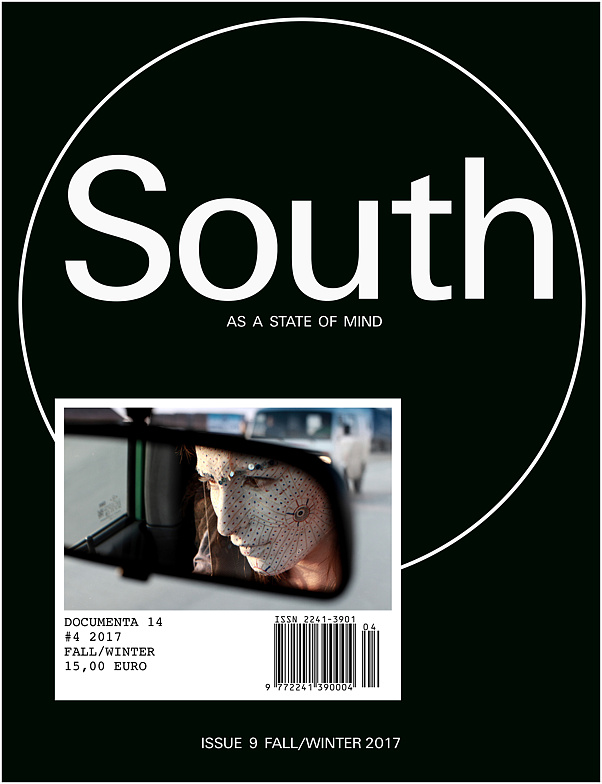
documenta 14 is not owned by anyone in particular. It is shared among its visitors and artists, readers and writers, as well as all those whose work made it happen.…
“There are two ways of seeing the ways of seeing the world. One is one way and the other is another. And nobody knows: ‘Is there, anywhere, one way of seeing the two?’”
—Stefan Themerson
There is something called the “hidden curriculum,” a term developed by educational theorists in the 1920s. If it were not so hidden, I could explain exactly what it is, but it always seems to conceal…
Angela Y. Davis, the African-American activist, feminist, academic, and writer, was born in 1944 in the southern city of Birmingham, Alabama. A student of Herbert Marcuse at Brandeis University, she also…
by Angela Brouskou – Theatro Domatiou and MiniMaximum ImproVision
Epitafios II is a collaboration between professional actors, musicians, students, performers, and the audience. A blanket of human bodies and objects covers the floor of the former headquarters of the…
Between 1974 and 1976, following the end of the dictatorship in Greece, the store on Tositsa 5 in Exarcheia was activated as the first artist-run space in Athens, called Center for the Fine Arts and founded…
Yves Laloy’s paintings defy categorization. André Breton was the first to call his work surrealist, a label that Laloy felt overly limiting. Yet, Laloy embraced another relationship also put forward…
Accessed from a different entrance as the Press and Information Center in the same building, the third floor of Leder Meid, in the former apartment of the factory owners, presents a number of paintings…
The Guatemalan composer and sound artist Joaquín Orellana is among the most important living members of South America’s musical avant-garde. In a career spanning half a century, his practice has combined…
Joaquim Pinto and Nuno Leonel’s film Rabo de Peixe portrays “an island within an island.” Rabo de Peixe is a fishing village, located on the island of São Miguel, which hosts the largest community of traditional fisheries in the Portuguese archipelago of the Azores. The re-edit of their 2003 film combines ethnographic observation and sociological investigation with a diaristic style and a nostalgic tone to portray the male members of two generations of fishermen from Rabo de Peixe and their daily lives, ambitions, and struggles…
This performance is inspired by all those people who at some point, in some place, in some way reacted to what was putting them down by posing thousands of questions. By all those who, if only for a brief…